
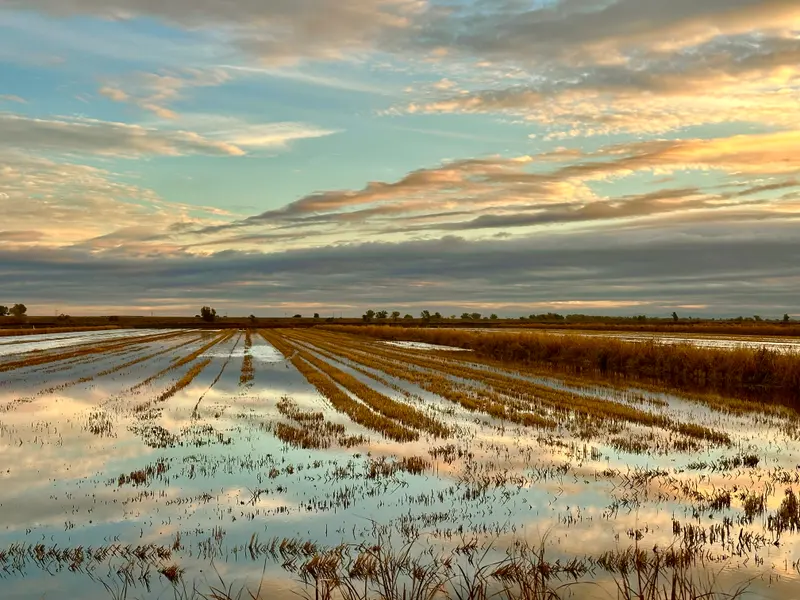
For a migrating bird, the usefulness of a rice field can change with a few inches of water or a few weeks on the calendar. A field may offer food at one stage and become difficult for a particular species to use at another. Managing that timing is central to the relationship between rice farming and waterbird habitat.
Robbins Rice Company documented its work with Audubon California's Working Lands Program in July 2015. The collaboration evaluated bird-friendly farming practices and produced a brochure explaining the company's participation in the Waterbird Riceland Management Program. Robbins Rice's account of the Audubon partnership (opens in a new tab).
Small management decisions across a large landscape
The historical program brochure identifies practical ways rice operations can support birds. Examples include shallow postharvest water, varied drawdown schedules, retaining winter rainfall where feasible, and maintaining habitat features along field margins. It describes participation as self-certified. That distinction matters: the document records a particular program and set of practices in 2015, rather than establishing a current independent certification for every product or field. Waterbird Riceland Management Program brochure (opens in a new tab).
The underlying idea is straightforward. Habitat depends on conditions birds can use, so a management plan has to consider depth, timing, and the range of species present. Simply counting flooded acres leaves out part of the story.
Why drawdown timing matters
A field does not move instantly from flooded habitat to dry ground. As water recedes, it passes through conditions that suit different feeding strategies. Coordinating those transitions across fields can keep useful habitat available longer.
A 2018 peer-reviewed study tested staggered drawdown schedules in California rice fields over two winters. Delaying drawdown changed habitat availability and bird use, with the longest delay in the experiment supporting particularly high use. The authors also acknowledged John Brennan and Robbins Rice Company among the farming partners who helped make the research possible. Research on extending waterbird habitat through staggered drawdowns (opens in a new tab).
The study's management context matters as much as its ecological result. Spring field preparation, rainfall, water availability, and infrastructure work can constrain what a grower can do. A useful habitat practice must fit a workable agricultural schedule.
That gives landowners a practical way to approach a proposal: define the habitat objective, identify the dates and water conditions it requires, and compare those requirements with the operation's needs before committing acreage.
Understanding the different programs
The historical Waterbird Riceland Management Program should also be distinguished from BirdReturns. BirdReturns arranges temporary habitat through work with private landowners and is managed by the Migratory Bird Conservation Partnership, which includes The Nature Conservancy, Audubon California, and Point Blue Conservation Science. Its participation opportunities and requirements should be checked directly with the program. About BirdReturns (opens in a new tab).
The distinction helps avoid treating every bird-friendly rice practice as the same agreement. A grower might manage habitat voluntarily, participate in a particular incentive program, or conduct work under a separate conservation commitment. The paperwork, duration, and obligations can differ even when the fields look similar.
Making habitat part of the annual plan
For a rice property, useful planning begins with the farm calendar. Set the expected harvest, water-delivery, drawdown, and field-preparation windows side by side. Then identify where a habitat opportunity fits and who will make the day-to-day decisions.
The Robbins Rice and Audubon collaboration provides a documented example of that conversation. It connects an agricultural operation with habitat expertise and asks how familiar field-management tools can serve an additional purpose.
Explore our stewardship work and water and irrigation resources.