
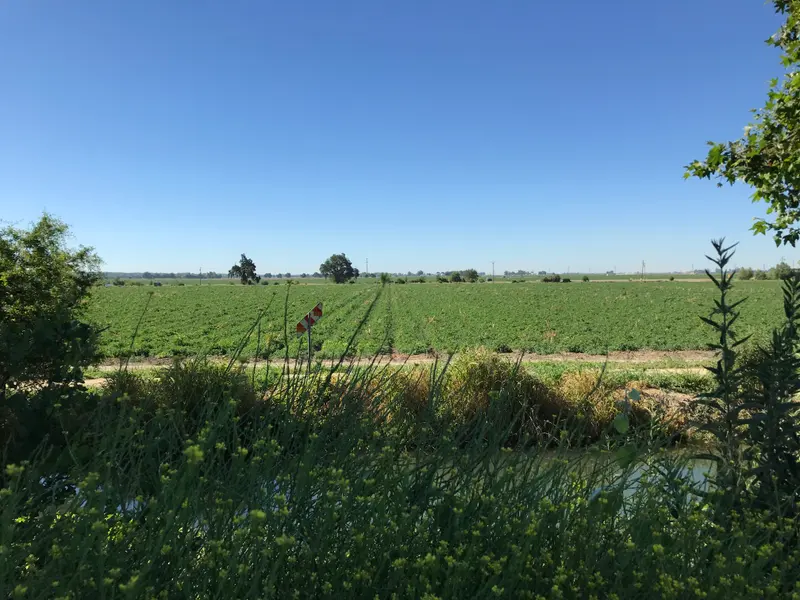
The edge of a field has a job to do. Equipment needs access, drainage needs room, and adjoining uses need consideration. With careful planning, that same space can also support a hedgerow: a managed planting of shrubs, grasses, flowering plants, and sometimes trees.
The strongest hedgerow projects begin with a practical question about the farm. Is the goal to provide flowers for beneficial insects, connect existing habitat, stabilize a particular edge, or create an educational planting? A clear purpose makes decisions about location and plant selection easier to defend over time.
Habitat that fits the farm
UC Integrated Pest Management explains that insectary plantings can provide nectar, pollen, and shelter for beneficial insects. Plant selection matters: different flowering periods can extend the season of available food, while poorly chosen plants may also host crop pests. Establishment and maintenance are part of the work, including irrigation, weed management, and pruning where needed. UC IPM guidance on insectary plants (opens in a new tab).
This is why a hedgerow should be treated as a managed part of the operation. A planting plan that looks attractive on paper still has to work beside the crop, the irrigation system, and the route a tractor uses every week.
Research summarized in California Agriculture has examined hedgerows in Sacramento Valley farming systems, including their relationships with beneficial insects and crop production. The findings support their potential value while also pointing to the importance of local conditions. A result measured in one crop or landscape is a reason to investigate a practice, rather than a promise of the same outcome on every farm. California Agriculture review of hedgerow research (opens in a new tab).
A local connection at Davis Ranches
Davis Ranches includes hedgerows and riparian restoration in its conservation work. Its public description connects these plantings with habitat and educational partnerships, making the field edge a place where students and visitors can see stewardship taking shape. Davis Ranches conservation work (opens in a new tab).
That educational value is easy to overlook. A hedgerow provides a manageable place to explain plant establishment, flowering seasons, and the relationship between cropped and uncropped ground. Visitors can return to the same planting and see change without needing to understand the entire farm at once.
Designing for the next ten years
For a landowner, the useful starting point is a map of daily operations. Mark turnarounds, access lanes, drains, utilities, and places where vegetation would interfere with inspection or maintenance. Then consider where a planting can remain in place as equipment and cropping plans change.
A maintenance plan should answer ordinary questions before planting begins. Who will irrigate during establishment? Who will manage weeds? How will dead plants be replaced? Where will branches or vegetation need to be kept back? These decisions help convert a planting project into a durable part of the property.
It is also worth documenting the purpose of the hedgerow. A simple record of the species planted, installation date, maintenance responsibilities, and intended benefits gives the next manager something useful to inherit. Photographs taken from the same location can help explain changes without making unsupported claims about ecological performance.
A successful hedgerow belongs to the farm's operating plan. Its value comes from thoughtful placement, appropriate plants, and the attention it receives after the planting crew leaves.
Learn more about our approach to land management and stewardship.