
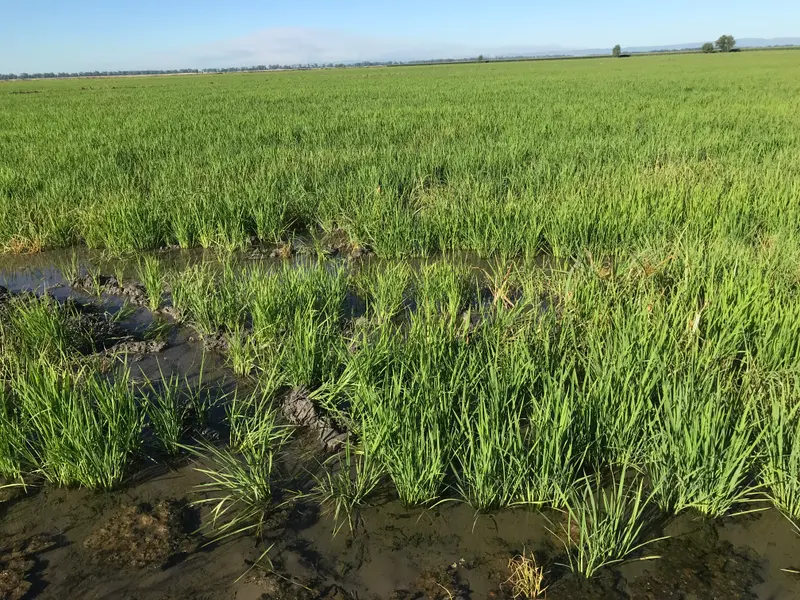
The story of a bag of rice begins well before milling. Variety, cultivation, and the decisions made after harvest all contribute to the product that reaches the kitchen. For Black Fox, that story includes a documented collaboration between Robbins Rice Company and Ichiro Tamaki.
Black Fox dates the relationship to 2006. Its account describes Tamaki mentoring the growers in traditional Japanese cultivation techniques to improve their California-grown Koshihikari rice. The company also explains that the fox on its label honors his guidance and draws on the fox's connection with Japanese rice tradition. Black Fox's account of Ichiro Tamaki's role (opens in a new tab).
That history gives the brand a specific foundation: a rice-growing operation seeking to develop a distinctive product, with an experienced mentor helping guide cultivation.
From Robbins to the kitchen
Black Fox is produced by Robbins Rice Company in Robbins, California. The brand describes an approach that follows its Koshihikari rice from seed through the finished bag, connecting the growing operation with the product sold to consumers. About Black Fox (opens in a new tab).
John Brennan's agricultural background includes his partnership in Robbins Rice with Lance and Jon Matteoli. The connection brings direct farming experience into his broader work with agricultural land. John Brennan's background.
For a reader accustomed to thinking of rice as a uniform commodity, the Black Fox story offers a different perspective. The variety and the way it is handled become part of the product's identity. A grower's choices are carried through to a bag a customer can recognize and buy again.
What semi brown means
The difference begins with the layers of the grain. Brown rice has had its outer hull removed while retaining its bran layers. Further milling removes bran to produce white rice. Semi-brown rice occupies a position between those forms because some bran is removed and some remains. USA Rice's guide to rice forms (opens in a new tab).
Robbins Rice describes its semi-brown product as having approximately 10 percent of the bran layer removed. That means a small portion of the bran is removed; it does not mean that only 10 percent remains. The producer presents the product as a way to bring some of brown rice's character together with cooking qualities closer to white rice. Package instructions remain the best guide to preparing the particular product. Robbins Rice's explanation of semi-brown rice (opens in a new tab).
The distinction is useful because milling terms can sound more interchangeable than they are. Tamaki's product range, for example, distinguishes Tamaki Gold, quick-cooking brown rice, and haiga rice. Those names describe particular products and processing approaches. They should not be used as alternate names for every partially milled rice. Tamaki rice products (opens in a new tab).
A collaboration built around quality
Tamaki's mentorship is part of the Black Fox story because cultivation remains part of the finished product. Milling gives a grain its final form, but the growing season comes first. The relationship connects knowledge about raising Koshihikari with the effort to bring a distinctive California rice to market.
Agricultural innovation often takes the form of sustained attention to a familiar crop: learning from another grower, refining a method, and connecting the resulting product with people who care about its qualities.
Black Fox brings those pieces together through a named variety, a local farming operation, a documented mentorship, and a distinctive milling choice. It makes the connection between agricultural land and the food it produces unusually easy to follow.
Explore Black Fox's farm story (opens in a new tab) and our broader approach to agricultural stewardship.