
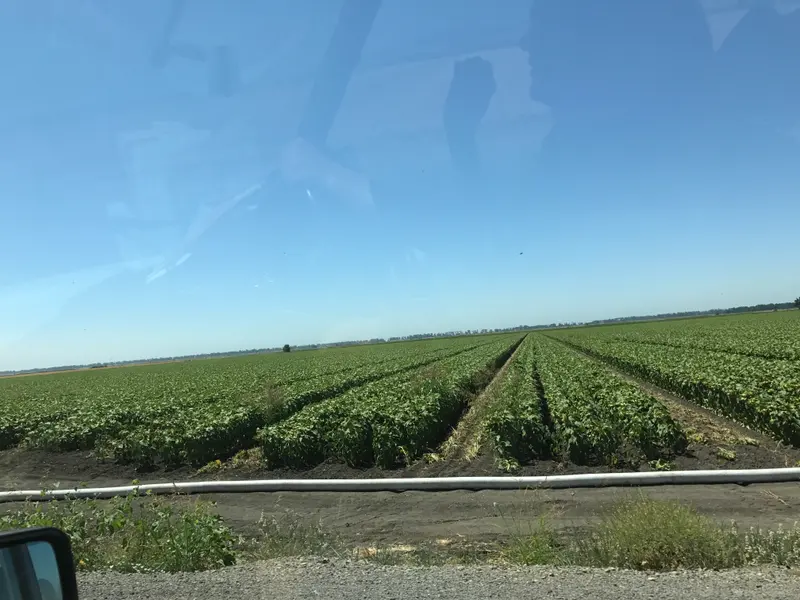
Planting rice is a decision about an entire growing system. The way seed enters a field affects the next steps: how the crop emerges, when water is applied, which weeds need attention, and how the operation responds to weather.
Drill seeding places rice seed into prepared soil with a seed drill. It differs from water seeding, in which seed is broadcast into a flooded field. Both methods aim to establish a productive stand, but they reach that point through different sequences of soil, water, and weed management.
Understanding the sequence is more useful than treating either method as a universal answer.
What happens after the seed is planted
In a drill-seeded system, seedlings must emerge through the soil. Moisture and seed placement therefore have immediate consequences. Early irrigation and the timing of a permanent flood become part of establishing the stand, rather than simply following a water-seeded schedule with different equipment.
UC Integrated Pest Management describes how dry-seeded rice systems use establishment and weed-management approaches that differ from water-seeded systems. Dry seeding can include more than drilling, so the terms are related but not identical. UC's guidance also makes clear that changing the planting method changes the weed-control decisions that follow. UC IPM guidance for rice weed management (opens in a new tab).
That has an important practical implication: a grower should evaluate the whole program before evaluating the drill itself. Equipment is only one part of the change.
Depth is a biological decision
Seed depth deserves particular attention. A seed can germinate successfully and still fail to produce a seedling that reaches the surface. Variety, planting conditions, and the distance the emerging shoot must travel all matter.
UC Agriculture and Natural Resources has reported greenhouse and field research examining planting depth in California rice varieties. The work helps explain why one depth recommendation cannot be separated from variety and field conditions. Its value lies in understanding establishment responses, including the tradeoffs that come with deeper placement, rather than copying a single number into every field plan. UC ANR research on drill-seeding depth (opens in a new tab).
For an operation considering a change, a measured trial can make the comparison more useful. Record the field condition, seed placement, emergence, irrigation sequence, weed pressure, and harvest result. The aim is to understand what caused an outcome well enough to make a better decision the following season.
Comparing systems fairly
A fair comparison should follow the crop through harvest. A change that simplifies planting may create a different demand later. A practice that works on one field may be less suitable where soil, drainage, or equipment access differs.
Water claims deserve the same discipline. The planting method alone does not establish a farm's total water use. To evaluate a proposed benefit, define what will be measured, over which period, and against which comparison. The same principle applies to cost, labor, and greenhouse-gas claims: attach the claim to evidence from the system being evaluated.
For a landowner or buyer, useful questions include whether the operation has suitable planting equipment, how irrigation is scheduled, who manages establishment, and what records exist from prior seasons. Those questions connect the production method to the capabilities of the property and the people operating it.
Drill seeding is one of the practical choices that shape a rice farm. Its value depends on how well the full sequence works in a particular setting. Local extension guidance and careful field records can help turn an appealing idea into a sound operating decision.
Explore our land management services and water and irrigation resources.